Clean those Stinky Shoes Naturally!

Springtime.  It brings the air of new life.  Blooming flowers send delicious aromas in small bursts through the warm breezy air.  It brings long days of children running through the grass, playing soccer and lacrosse, and bringing stinky shoes home to roost.  Thankfully, there are some easy ways to decrease the odor, bacterial content and potential fungi from thoroughly used shoes.
Washing.  If the shoes can take it, throw them in the wash.  Canvas shoes without much support can go through the washer without losing much shape.  Allow shoes to dry completely outside in the sunshine.  If shoes can not go into an agitator like a washer, you can make a solution of borax, vinegar and lemon juice added to a gallon of water.  Let shoes soak for 30 minutes.  Rinse and dry in the outside air.
Sunshine.  For supportive shoes or other shoes that cannot be washed in a traditional way, there are a few options.  First, dry shoes completely.  A damp shoe is a great place for bacteria and fungi to breed.  UV light from the sun is a deterrent to fungus and certain bacterial growth.  Sometimes just drying a shoe will decrease the odor.
Baking soda.   Baking soda is wonderful for decreasing odors and killing both bacteria and fungi.  For shoes that are routinely wet, make a mixture of baking soda, salt, water, and lemon juice into a paste.  Apply to the inside of the shoe and let dry for a few days.  When the mixture begins to crack off, bang shoes together to get rid of the remains.  Dust the inside of the shoe with cornstarch and wipe out.  If you have especially sensitive skin, baking soda may not be the best option.
Cedar.  Recycle old panty hose by filling with cedar shavings and tying off the ends.  Place in shoes each night.  The shavings will help to draw the moisture out of shoes and leave a fresh scent.
Vodka.  Fill a spray bottle with vodka and a few drops of your favorite essential oils.  Shake and lightly spray the inside of the shoe.  The alcohol will help dry the shoe and prohibit bacterial and fungal growth.
Coffee.  Place coffee grounds in a cheesecloth or recycled panty hose.  Leave overnight.  The coffee will absorb moisture and odors.  Do not use with lightly colored shoes as the coffee may stain the material.

Cleaning Your Pots With Natural Ingredients

Not too long ago, I visited my sister’s house.  Normally, everything is in almost compulsive order.  On this day, however, a 5 quart stainless steel pot sat out of place near the kitchen sink.  A quick peek revealed the scorch marks left after a mishap with her home made oatmeal.  She tried for 3 days to scrub the pot clean and was ready to get rid of it completely.
Before discarding these items, consider the stain and the pot.  For this burned on mess of milk and carbohydrates, pour in enough lemon juice to cover the bottom of the pot.  Sprinkle a light coating of salt and let sit overnight.  In the morning, take a damp sponge or cloth and scrub lemon/salt mixture around stain.  It should lift almost instantly.
For greasy stains and messes, try scrubbing with salt alone.  For tougher stains, pour about 1 cup of vinegar into the pot.  Fill the rest with water (for big pots, add another half to full cup of vinegar) and boil for 5 minutes.  Then scrub with sponge and salt.
In place of a scrubber sponge, you can use a bit of crumbled aluminum foil.  If you have old panty hose to recycle, you can cut them and tie around a regular sponge or cloth and use as a scrubber.
Pots that have reached their limits as cookware can easily be recycled.  They make excellent planters, especially for seed starting.  They can even be painted, etched with sand, or dented to add character to a patio garden.  Pot tops can be used as bird feeders or baths.

Reduce Stress From Your Busy Life

The house is a mess, the kids need a ride to school, the car keys are missing, the dog just got out of the yard, and your boss just scheduled a mandatory meeting first thing this morning…

…no wonder why you feel stressed out.

Stress is a normal physical response to events that make you feel threatened, or upset your balance in some way.  In small doses, stress can help you perform under pressure and motivate you to do your best.  But beyond a certain point, stress stops being helpful and starts causing major damage to your health, your mood, your productivity, your relationships, and your quality of life.

There is no doubt that women have a lot on their plates these days, between balancing work responsibilities with commitments at home and still trying to find time to do the things they enjoy.  Often women feel overwhelmed by the things that are expected of them and do not take the time to plan for and achieve the things they want.

According to the findings from the 2013 Work/Life Balance Survey conducted by Maid Brigade, 78% of women feel they work a “second shift” when it comes to their daily life responsibilities, such as cooking, cleaning, running errands, and taking care of family.  In 2012, the survey yielded 72%.

The survey also showed that 51% of women feel the need for control over their lives.  The lack of control over the minute-to-minute chaos that fills each day may be a leading stress trigger.

The survey’s findings showed that daily home and family repsonsibilities prevented some women from persuing their individual hobbies and personal health goals, which added stress in their lives.

In honor of April’s “National Stress Awareness ” month, here are some preventative measures that can help combat stress and help you lead a more balanced and healthy lifestyle:

Learn to delegate properly and be comfortable with it.  Delegating things that you don’t like to do can lighten your load and free up some needed time.  Make a list of all your routine tasks.  Decide what can be delegated.  For example, hiring a cleaning service is one way to take that large weekly chore off your hands and free up some time.

It is important to delegate responsibilities to create that “me time” you deserve (and need).

Taking “me” time when you have a family, work, home, and life to keep may seem like a selfish act, but guilt may be our greatest setback to creating a more balanced, calm and happy existence for ourselves and our families.

Because of our demanding schedules, there is often very little time or energy left for for ourselves.  Decide what really matters to you and what you can realistically achieve based on other commitments.

Stress may not be completely eliminated from your life, but you CAN control how much it affects you.  Relaxation techniques like meditation and deep breathing can help the body and mind relax.  When practiced regularly, they can lead to a reduction in everyday stress levels and can also increase your ability to stay calm and collected under pressure.

Stay Allergy-Free in Your Bedroom

Sleep is imperative to good health.  As spring blooms into the allergy season, consider a few simple tricks to keep your bedroom allergy free.
Fresh air.  While the pollen count is low, open windows to circulate air in the house.  When pollen counts are high, close windows and use air conditioning or ceiling fans to cool the bedroom.
Pets.  We love them.  They add so much substance to our lives.  Unfortunately, during allergy season, they can also add dander and pollen.  Bathe pets weekly to reduce the amount of dander they shed and to clean fur of any pollen collected while frolicking through the grass and flower beds.
Dust mites.  They are known to be a huge allergy trigger.  Wrap mattress and pillow in protective coverings.  Wash bedding in hot water or dry in a hot dryer.  Heat kills the mites that are embedded in the cloth.
Decrease respiratory irritants.  Don’t allow smoking in the house.  Decrease the amount of perfumes and fragrances.  Use natural, non-toxic cleaners in place of harsh, irritating chemicals.
Bringing the outdoors in.  Remove shoes and leave them by the door, especially if you have carpeting.  When children come in from playing outdoors, have a change of clothing or a bath waiting for them.  Bathe nightly to reduce pollen on skin and hair.  Dry clothing on an indoor line or in the dryer.  Do not use window fans as they may draw pollen into the house.
Mold.  It hides everywhere.  Check window sills and carpeting around windows.  Fix any leaks in the plumbing or roof.  Keep dirty clothing in hampers outside of the bedroom and empty every day.  Wash damp clothing as soon as possible.  Keep humidity in the house below 50%.  Most allergies worsen in humid climates.  Moist air promotes mold growth.  Get a dehumidifier if needed.  Be sure to empty collection containers often and clean thoroughly with a solution of vinegar and water.  Dry completely.
Filter.  Change central air filters regularly.  Dust bedroom with a damp microfiber cloth.  Use a vacuum cleaner with HEPA filter at least once weekly to vacuum bedroom, under bed and nightstand.

Spring Window Cleaning

It is that time of the year again!  The weather is warming and the birds are singing.  The signs of winter are quickly becoming a memory.  Early spring is a great time to get the remnants of winter out of the house.  Open those windows and circulate that fresh air!

Dry the condensation on the windows and clean the window sill.  Use a paste of baking soda and water to remove any mold or dirt stains in the tracks.  Clean windows with a vinegar/water solution and a squeegee.  Remove dirt from window screens by wiping both sides gently with a microfiber cloth.  Spray with an ample amount of vinegar, wipe with a damp sponge, then rinse with warm water.  Repeat on the other side of the window.

Dust blinds with a microfiber cloth.  Launder curtains and spray with your favorite freshener.

To make your own air freshener spray, grind a few teaspoons of your favorite spices (cloves, rosemary, oregano, or thyme), or add some essential oils (lemon or lavender) to distilled water with a few teaspoons of vodka.  Shake up and mist on curtains and around room.

Breathe deeply, and relax!

Stress Relief

Let’s face it, we all have stress in our lives, some more than others.  How we cope with the stress is what is important.  So, when the going gets rough, here are a few tips to keep in mind when quick stress relief is needed:

Take a breath.   Breathe in and out.  Be aware of your breath as it moves through your lungs.  When you exhale, focus on the tension leaving your body with each breath.

Go for a walk.  If the situation allows, go for a quick walk.  A short burst of exercise will get your blood flowing.  It will help to bring endorphins and other mood elevators back into your system.

Alter your perspective.  When we focus on a stressful situation, it may be difficult to see things differently.  Look at yourself in the mirror and try to see your situation the way an outsider may see it.  If you have a problem with a friend or colleague, try to visualize their point of view.  Often, this will lead to clues for a resolution.

Vent.  Use your friends as a sounding board.  Stress that is held close or bottled up may contribute to health problems over the long term.  Calling a friend will alleviate stress and may offer the fresh perspective you need.

Touch.  Contact with other people or pets is valuable for people who are stressed.  Touch can be reassuring and comforting.  Whether it is a hug from a friend or a few minutes petting a furry friend, touch lowers blood pressure and reduces other physical manifestations of stress.

Go to your happy place and laugh!  Thinking happy thoughts actually can reduce stress.  Focusing on the positive in any situation changes your overall outlook.  Laughter increases endorphins, regulates breathing and provides a physical release to help reduce tension.

Increasing Levels of Lead Poisoning in Children

Last week, government health officials reported that more than half a million children (or 1 in 38) in the United States have lead poisoning.

Too much lead can harm developing brains which can mean a lower IQ, impaired hearing and behavior problems.  Lead can also harm a child’s kidneys and other organs.  High levels in the blood can cause convulsions, coma, and even death.

The Centers for Disease Control and Prevention say that children who get lead poisoning sometimes live in old homes or ones under renovation. Children can also pick up lead poisoning from paint chips or dust that gets into their mouths, or from soil contaminated by old leaded gasoline or from tainted drinking water.

New testing and preventative measure are needed but because of budget cuts last year, programs and grants for lead poisoning were eliminated.


The Harm in Red Meat

According to a study published in yesterday’s Nature Medicine, the substance “carnitine,” which is found in red meat, can clog arteries, which is bad for the heart.

After ingested, bacteria in the gut breaks down carnitine.  The carnitine turns into a compound that can harden arteries.

So, the more red meat a person eats, the more carnitine is converted to a compound, increasing its effects.

Carnitine is also found in poultry, fish, certain vegetables, and wheat, but its main source is red meat, especially lamb.

Vegans and vegetarians eat fewer foods that contain carnitine, so their gut bacteria does not process it as easily, which is one of the benefits of a meatless diet.


Stains

Stains…no matter how hard we try, we can’t get them out of our lives!  The good news is that there are natural ways we can clean them when they do appear.

Try using lemon juice (an acid) to help with grass stains (alkaline).  White vinegar can also be used to combat grass stains.

Borax (alkaline) is a great cleaner for protein and acid stains.  Corn starch, diluted or sprayed on clothes, is very absorbent and works beautifully on protein stains.

Ditch the petroleum-based detergents and opt for vegetable-based soaps which are better for the environment.  Castile soap, which contains olive oil, is a great vegetable-based soap.  Use Castile soap or Washing soda on grease stains.

The water and bubbles in club soda work wonders in lifting acidic stains like berries and wine.

Cream of Tartar is color-safe and can be used on coffee or tea stains.

Borax, Washing soda, and white vinegar can be used on stains like tomato juice.


Green Clean Your Bathroom

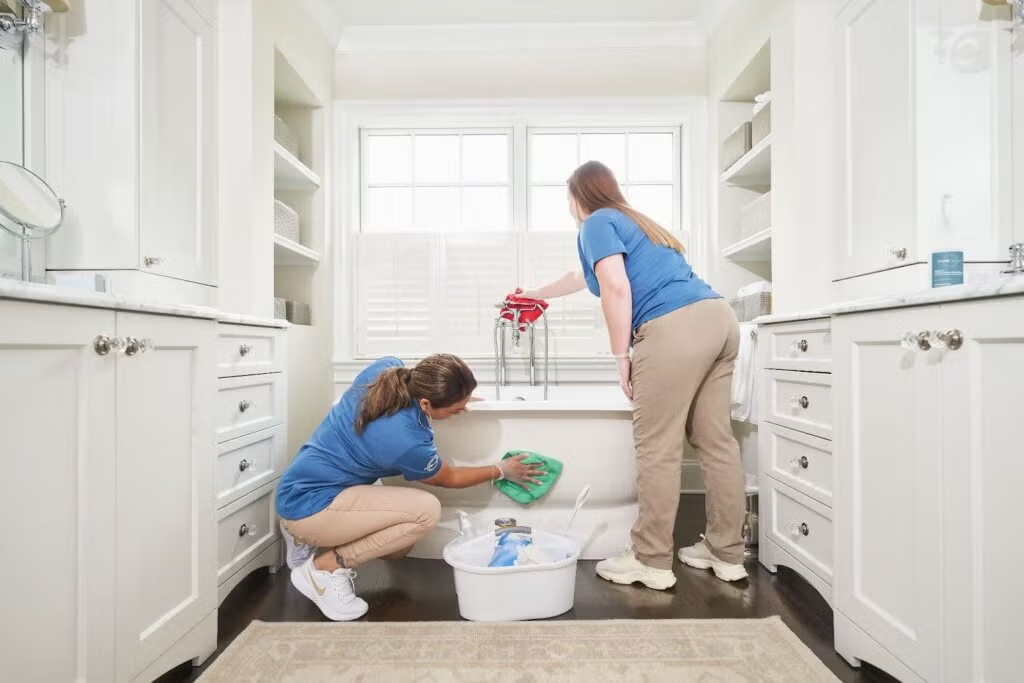
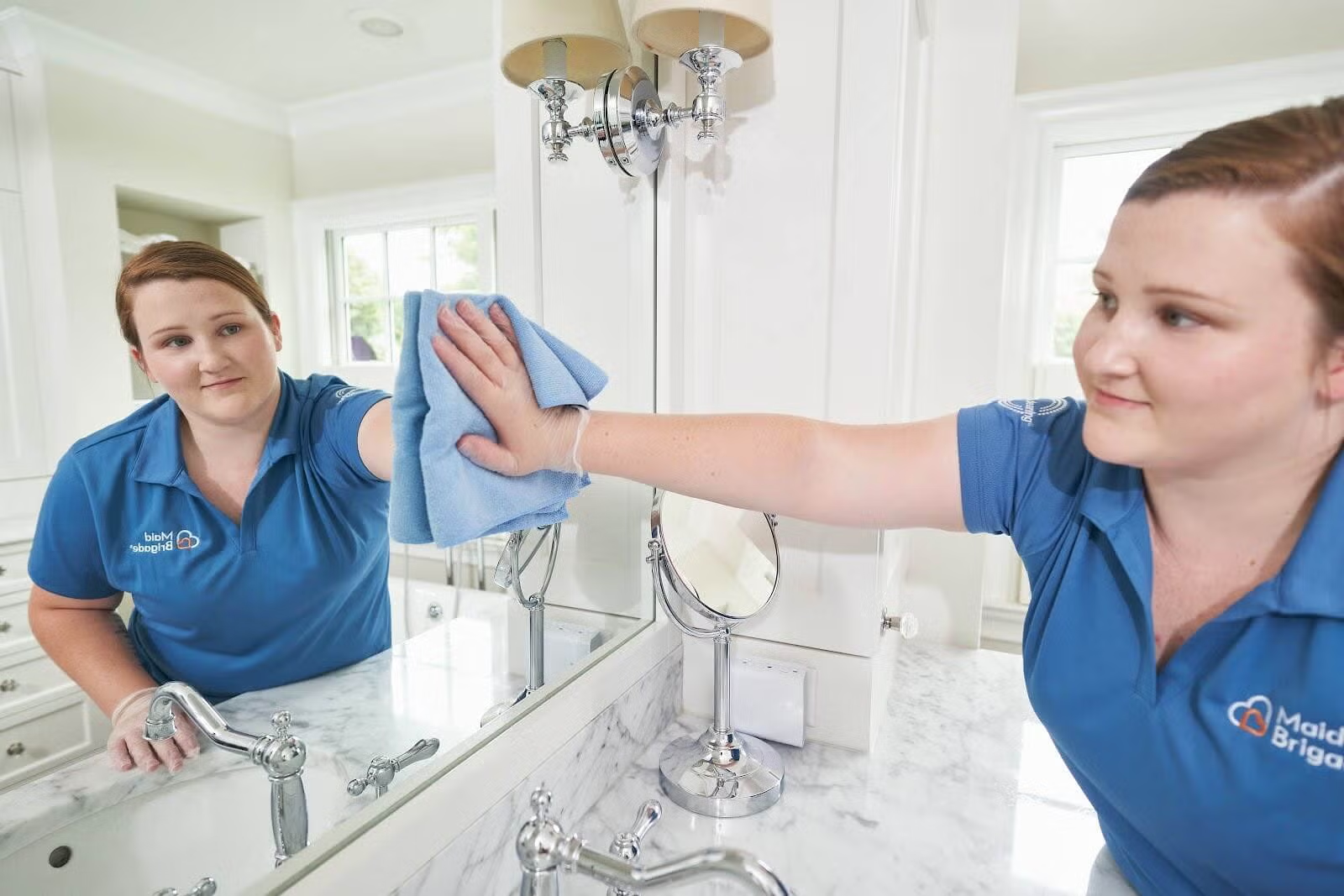
The spring cleaning months have finally arrived!  To help you get started on your “journey of cleaning,” here are some ways to clean your bathroom that are healthy for your family, and environmentally green for the earth.

The only ingredients you need are lemon juice, baking soda, vinegar, Dawn liquid detergent, borax, lavender oil, and a few microfiber cloths.

To remove hard water build-up around faucets, spray lemon juice on the affected areas, wait about 10 minutes, and rinse.

To get rid of soap scum, make a paste of baking soda and water.  Spread mixture onto soap scum, scrub with a microfiber cloth.  Rinse.

To make your toilet bowl shine, pour 1/2 cup Borax into the bowl.  Let it sit for about 1 hour.  Scrub with a toilet brush.  Flush.  Clean the lid and rim with vinegar and wipe with a clean microfiber cloth.

For a natural antibacterial spray, add 1 cup water and 1 teaspoon lavender oil into a spray bottle.  Shake and spray.

When cleaning granite countertops, use straight soap and warm water to clean.  Avoid using vinegar on granite.